
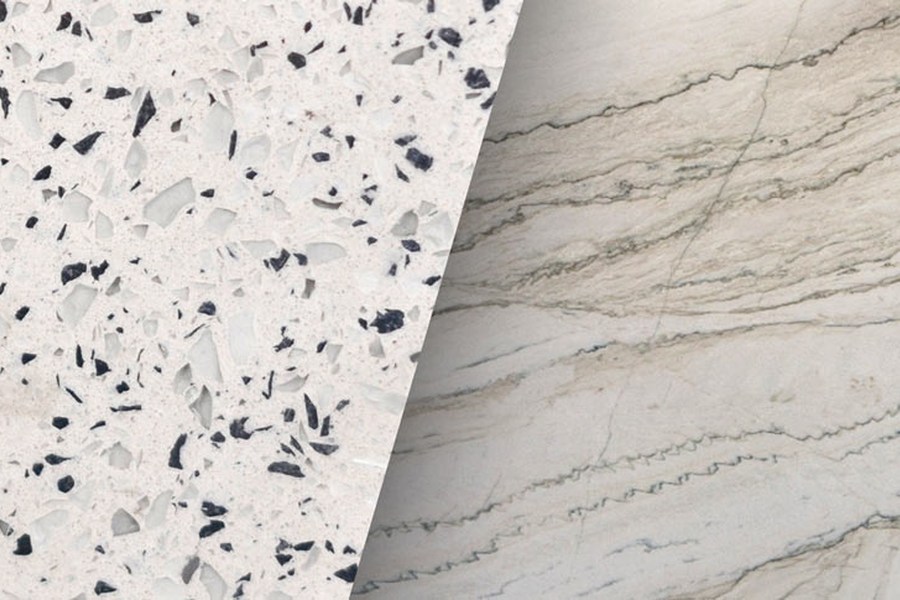
Quartz and quartzite countertops may sound similar, but they are very different materials with different performance, care, and characteristics.
Quartz is an engineered material, made from crushed natural quartz combined with resins and pigments. Because of this, it is non-porous, more consistent in color, and generally does not require sealing. It is also easier to maintain and more resistant to staining under normal use.
Quartzite, on the other hand, is a natural stone formed under heat and pressure in the earth. It is typically harder than granite and has a more natural, unique appearance. However, unlike quartz, quartzite is porous and may require periodic sealing to help reduce staining.
When it comes to daily use:
- Quartz is generally more resistant to stains but less resistant to high heat
- Quartzite is more heat-resistant but can be more sensitive to staining if not sealed properly
Both materials are durable and suitable for kitchen countertops, but they behave differently.
Key differences:
- Quartz: engineered, low maintenance, no sealing required
- Quartzite: natural stone, may require sealing, more variation
- Quartz: better stain resistance
- Quartzite: better heat resistance
Important note:
Proper care, installation, and usage conditions can affect the performance of both materials. It is always recommended to follow general care guidelines and consult professionals if needed.